






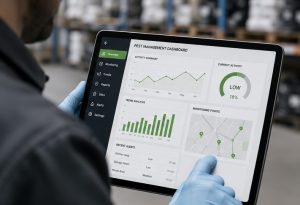
The Quiet Shift Transforming Pest Management
Imagine trying to navigate South London without a map.
No road signs.
No GPS.
No traffic updates.
You could still reach your destination.
But the journey would be slower, more difficult, and far less efficient.
For many years, pest management faced a similar challenge.
Professionals often had to make decisions using limited information.
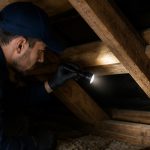
Inspections provided valuable insights, but they only offered a snapshot of what was happening at a particular moment.
Today, technology is changing that.
And one of the biggest changes is not a new treatment or a stronger chemical.
It is data.
Why Information Matters
Every pest leaves clues behind.
Where it was found.
When activity occurred.
How often it appeared.
What environmental conditions existed at the time.
Individually, these details may seem insignificant.
Together, they tell a story.
And the more information available, the clearer that story becomes.
Fun Fact #1
Many industries already rely heavily on data-driven decision making.
Weather forecasting, healthcare, logistics, and finance all use historical information to identify patterns and improve outcomes.
Pest management is increasingly moving in the same direction.
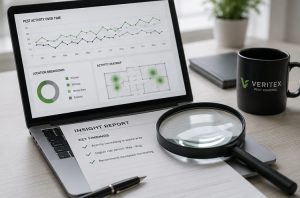
From Guesswork To Understanding
Imagine two buildings experiencing the same pest issue.
One relies only on occasional inspections.
The other combines inspections with ongoing monitoring and historical records.
Which building is likely to have a better understanding of what’s happening?
The answer is usually the one with more information.
Data helps turn observations into insights.
And insights help support better decisions.
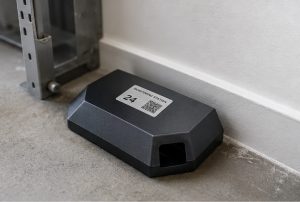
The Rise Of Smart Monitoring
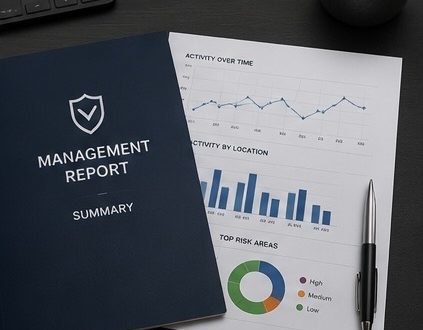
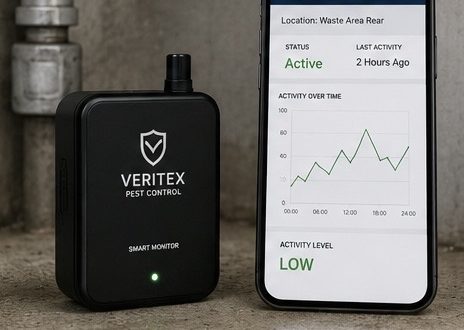
Modern monitoring systems can provide information that was difficult to obtain in the past.
Activity patterns.
Environmental conditions.
Changes over time.
Emerging trends.
Rather than relying solely on visible signs of activity, professionals can analyse information collected across weeks, months, or even years.
This helps create a much broader picture.
Fun Fact #2
Researchers have discovered that many pest populations follow surprisingly consistent behavioural patterns when enough historical data is available.
What initially appears random often becomes more predictable over time.
Why This Doesn’t Mean Chemicals Are Disappearing
Data is not replacing traditional pest management tools.
It is helping improve how those tools are used.
The goal is not fewer solutions.
The goal is smarter decisions.
When professionals better understand a problem, they are often better equipped to determine the most appropriate response.
Information helps support expertise.
It does not replace it.
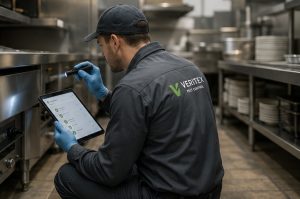
Why Businesses Are Paying Attention
Businesses are increasingly interested in technologies that provide greater visibility into potential risks.
Restaurants.
Warehouses.
Retail premises.
Office buildings.
Property managers.
All benefit from understanding what is happening behind the scenes.
Because identifying a developing issue early is often easier than responding to a larger problem later.
Fun Fact #3
Some modern monitoring systems can collect information continuously, helping reveal activity patterns that might otherwise go unnoticed between inspections.
What This Means For South London
Across South London, homeowners and businesses are benefiting from an industry that continues to evolve.
Technology is helping transform information into understanding.
And understanding leads to more informed decision making.
The future of pest management is not simply about treatment.
It is about visibility.
It is about awareness.
And increasingly, it is about data.
Looking Ahead
As monitoring systems become more sophisticated, professionals will continue gaining access to better information and deeper insights.
The result is a pest management industry that is becoming more proactive, more informed, and more precise.
Because when you understand a problem better, you are better prepared to solve it.
Learn More
Visit www.veritexpestcontrol.com to explore more insights into the technology, research, and innovations shaping the future of pest management across South London.