







You Cannot Solve A Pest Problem You Do Not Understand
A pest is spotted.
A photo is taken.
A treatment is recommended.
But what if the pest has been identified incorrectly?
This happens more often than many people realise.
Different pests can leave similar signs.
Similar-looking insects can require completely different approaches.
Rodent activity can be confused with other types of damage.
And treating the wrong problem can allow the real issue to continue.
That is why accurate pest identification is becoming more important than ever.
Before a problem can be effectively managed, professionals need to understand exactly what they are dealing with.
Not Every Pest Problem Is The Same
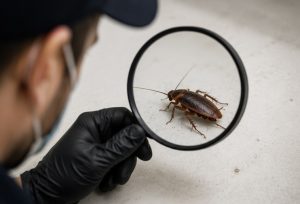
A small insect found in a kitchen could be:
- A fruit fly
- A drain fly
- A house fly
- Another flying insect
They may look similar at first glance.
But the source of the problem may be completely different.
One may be connected to food waste.
Another may be linked to drainage.
Another may be entering through doors or windows.
Correct identification helps professionals investigate the right cause.
Misidentification Can Lead To The Wrong Solution
Imagine treating the visible symptom without understanding the source.
A business sees flies.
Treatment is carried out.
The flies return.
The same process is repeated.
But if the real source is a drainage issue, waste problem or structural entry point, the underlying cause remains.
The problem has not been solved.
It has only been temporarily treated.
Accurate identification helps professionals move beyond the visible pest and investigate the conditions that support it.
Technology Is Improving Pest Identification
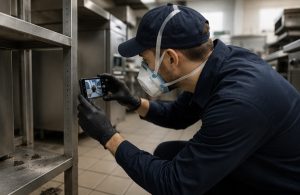
Modern pest identification is increasingly supported by technology.
High-resolution photography can help professionals document pests and evidence more clearly.
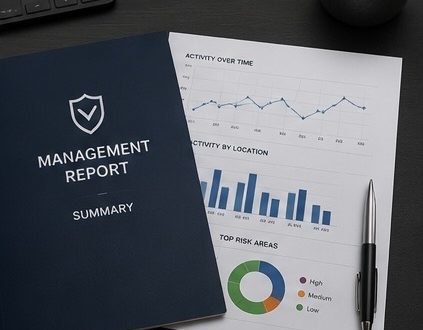
Digital inspection records allow findings to be compared over time.
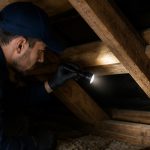
Specialist tools can help professionals examine areas that may be difficult to access.
In some situations, technology can also support the analysis of images and patterns.
However, technology does not replace professional expertise.
It helps professionals gather better information.
Evidence Matters
A professional pest inspection should be based on evidence.
This may include:
- Photographs
- Inspection records
- Signs of activity
- Environmental conditions
- Location
- Historical data
The more evidence available, the more informed the assessment can become.
Instead of simply saying:
“There are pests here.”
A professional assessment should help answer:
What pest is present?
Where is it coming from?
Why is it there?
What conditions are supporting the problem?
What is the most appropriate next step?
Different Pests Require Different Approaches
Correct identification matters because pests behave differently.
A rodent problem may require attention to:
- Entry points
- Food sources
- Harbourage areas
- Movement patterns
A fly problem may require investigation of:
- Waste
- Drainage
- Food preparation areas
- Moisture
A bed bug problem may require a completely different inspection process.
The correct identification helps determine where professionals should look next.
The Visible Pest May Not Be The Real Problem
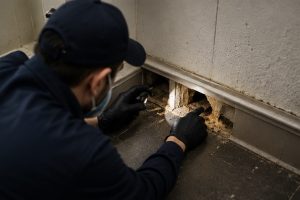
One of the biggest mistakes in pest management is focusing only on what can be seen.
The pest may be a symptom of a larger environmental issue.
For example:
A fly may indicate a drainage problem.
A mouse may indicate an entry point.
A wasp may indicate a hidden nest.
A pest sighting is often the beginning of an investigation—not the end.
Accurate Identification Helps Businesses Make Better Decisions
For businesses, incorrect identification can become expensive.
The wrong treatment may lead to:
- Wasted money
- Repeated treatments
- Business disruption
- Continued pest activity
- Damage to reputation
Accurate identification helps businesses understand the problem before deciding what action to take.
This is especially important for restaurants, warehouses, cafés and other commercial environments where pest activity can create significant operational risks.
Data Makes Identification More Powerful
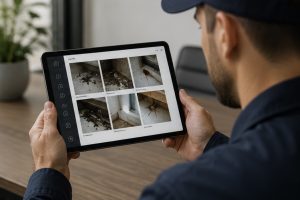
A single image can provide useful information.
But an image combined with inspection history can provide much more.
Historical records may reveal:
- Whether the same pest has appeared before
- Where activity has previously been found
- Whether the problem is seasonal
- Whether previous recommendations were effective
This allows identification to become part of a much bigger picture.
The Future Of Pest Identification
The future of pest management will likely involve increasingly advanced tools for:
- Image documentation
- Digital reporting
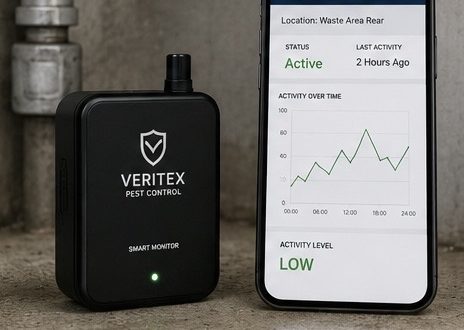
- Monitoring
- Data analysis
- Pattern recognition
But the fundamental principle will remain the same.
Before solving a problem, you must understand it.
Technology can help professionals collect more information.
Data can help reveal patterns.
Professional expertise can help interpret the evidence.
Together, these create a more informed approach to pest management.
The Bigger Lesson
Accurate pest identification is not simply about knowing the name of a pest.
It is about understanding the problem.
Where is it coming from?
Why is it there?
What conditions are supporting it?
And what evidence supports the recommended solution?
The future of pest control is becoming more accurate, more transparent and more data-driven.
Because the right solution begins with understanding the right problem.
Learn More
Visit www.veritexpestcontrol.com to learn more about evidence-based pest inspections, accurate pest identification and technology-led pest management across South London.