








Imagine if weather forecasts didn’t exist.
You wake up in the morning.
The sky looks clear.
You leave the house without an umbrella.
An hour later, you’re caught in heavy rain.
The problem isn’t that the information didn’t exist.
The problem is that nobody was using it.
For years, pest management faced a similar challenge.
Professionals could respond to problems after they appeared.
But what if there was a way to identify patterns before infestations became obvious?
What if historical information could help reveal where future pest activity is more likely to occur?
This is the idea behind one of the most fascinating developments in modern pest management: historical pest intelligence.
What Is Historical Pest Intelligence?
Every pest problem leaves behind information.
When it happened.
Where it happened.
What species were involved.
What environmental conditions existed at the time.
Individually, these details may not seem particularly useful.
But when collected over months and years, they begin to reveal something valuable.
Patterns.
And patterns often tell stories.
The Power Of Looking Back
Many industries already rely heavily on historical data.
Meteorologists study previous weather patterns.
Traffic planners analyse years of road data.
Retailers examine customer trends.
Pest management is increasingly exploring similar approaches.
Because pests rarely behave completely at random.
Many species respond to predictable factors such as:
- Temperature
- Humidity
- Food availability
- Building conditions
- Seasonal changes
Understanding these relationships helps create a clearer picture of potential future activity.
Fun Fact #1
Scientists have discovered that some pest populations increase and decrease in remarkably consistent seasonal cycles.
In certain environments, these patterns can repeat year after year.
Why Patterns Matter

Imagine discovering that a particular type of pest consistently appears in specific areas during the same season.
That information becomes valuable.
Not because it guarantees a future problem.
But because it improves awareness.
The more information available, the easier it becomes to understand risk factors.
Historical data transforms isolated incidents into meaningful insights.
From Reactive To Predictive Thinking
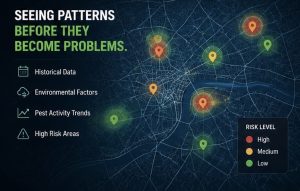
Traditionally, pest management often focused on solving problems after they became visible.
Modern technology is helping shift the conversation.
Rather than asking:
“Where are the pests today?”
Researchers are increasingly asking:
“Where might activity occur next?”
The goal is not prediction with perfect certainty.
The goal is better understanding.
And better understanding often leads to better decisions.
Fun Fact #2
Some modern monitoring systems can combine historical records with current environmental conditions to help identify emerging trends.
The more information available, the clearer the overall picture becomes.
Why Businesses Are Paying Attention
For businesses, information has value.
Restaurants.
Warehouses.
Retail premises.
Office buildings.
Property managers.
Many organisations are becoming increasingly interested in technologies that provide greater visibility into risks before they become major disruptions.
Historical intelligence helps support that goal.
Because identifying a trend early is often easier than dealing with a larger problem later.
What This Means For South London
Across South London, homes and businesses face changing environmental conditions throughout the year.
Seasonal weather patterns.
Urban development.
Human activity.
All influence pest behaviour.
As technology continues to improve, professionals are gaining access to better tools for understanding these patterns.
The result is not necessarily predicting every pest problem.
The result is making more informed decisions based on better information.
Fun Fact #3
Researchers are continually exploring how artificial intelligence and advanced analytics can help identify hidden patterns that humans might otherwise overlook.
This field continues to evolve rapidly.
The Future Of Pest Intelligence
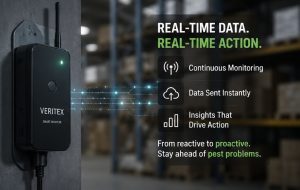
The future of pest management may look very different from the past.
Instead of relying solely on observations made during inspections, professionals increasingly have access to large amounts of information that can reveal trends over time.
Historical pest intelligence is helping transform data into understanding.
And understanding creates opportunity.
Because when you know more about the conditions that encourage pest activity, you are better prepared to respond.
Learn More
Visit www.veritexpestcontrol.com to explore more insights into the technology, research, and innovations shaping the future of pest management across South London.